

Frameless, foldable, built-in AI, 5G, miniature supercomputers, cameras with ever more pixels and improved zoom: these were and still are the smartphone trends and innovations of 2019 and 2020. This year, many mobile devices with these features will again be found under Christmas trees. But not everything that manufacturers, tech companies, and smartphone developers come up with year after year catches on in the market. Some features and functions of the past were also flops and turned many a model into a real shelf-warmer.
Whether it's the iPhone from Apple, the KIN from Microsoft, the Fire Phone from Amazon, or smartphones and cell phones from Motorola, Huawei, Samsung, LG, HTC, Nokia, or Sony - whether on Windows Phone, iOS, or Android operating systems - in this article, we show you our top 3 biggest smartphone flops.
Smartphone Flop 1: Smartphones with two screens
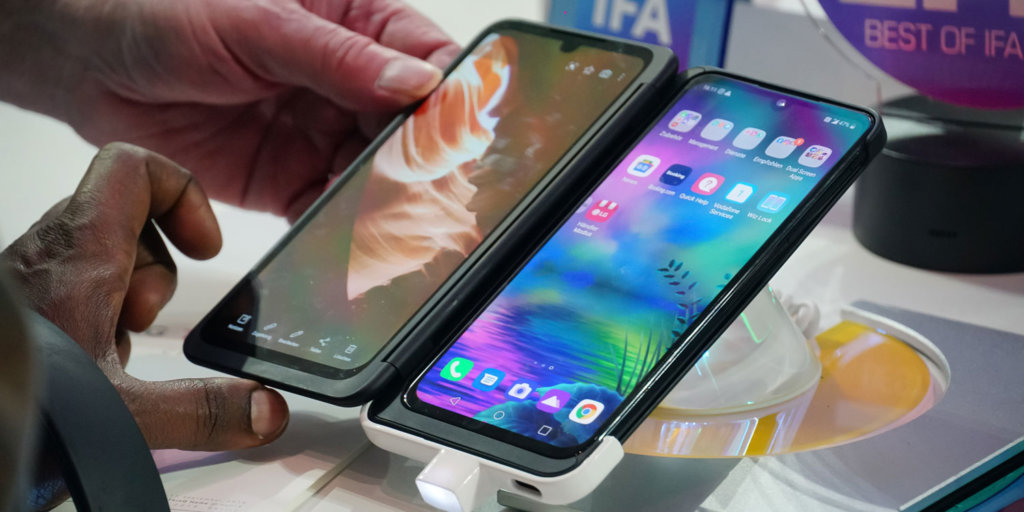
At the beginning of 2018, the then-new Axon M from Chinese manufacturer ZTE generated a lot of PR and headlines. The idea of two screens for a smartphone actually sounded quite promising. There were:
- two different screens, e.g., for parallel use of different apps
- or you could combine both screens into one overall screen (for clearer work or navigation)
The price and performance of the Axon M were right and made this offer quite attractive. But it turned out differently. The hinge in the overall screen mode was perceived as a disturbing line in the middle of the screen. In addition, there was the sometimes cumbersome phone calls, the slightly worse camera, the higher battery consumption, and the larger format and weight of the smartphone. All of these may have been the reasons why this idea and the Axon M hardly caught on in the market. This smartphone rarely received a good rating in tests.
Smartphone Flop 2: Smartphones with built-in projectors
Unlike a projector that can be controlled via a cell phone, there actually were and still are smartphones with a projector integrated into the phone. Everything is in one device. In 2012, the Samsung Galaxy Beam was one of the first of these models, but in addition to Samsung Galaxy, there are also current smartphones with this feature, such as the X4 Soul Vision.
Owners of a smartphone with an integrated projector can, for example, project photos, images, videos or livestreams onto a (projection) screen, directly show PowerPoint presentations via the smartphone, or project the Facebook timeline onto the ceiling and read articles. Have you never seen this and this function does not sound familiar to you? As you can see, this well-intentioned feature from Samsung did not really catch on or was ahead of its time.
Smartphone Flop 3: Smartphones with built-in 3D screens
3D movies in the cinema are great. 3D on your own TV at home has a stable fan base. Unfortunately, there is often a lack of corresponding offers. But 3D on a smartphone?
As you can see from this list, the 3D boom could not prevail everywhere to the same extent. Due to the small display, the smartphone unfortunately does not belong to this group. Although HTC and LG developed smartphones with great 3D effects, most app developers did not follow suit. And so there were hardly any applications where the new 3D effects could have come into their own. Thus, the built-in technology had no use.
It was different with TV and home cinema: With the help of 3D software, such as the MakeMe3D tool, it was possible for 3D fans from the beginning to convert normal 2D videos into 3D movies themselves and without extensive knowledge. Here, every 3D fan simply provides their own supply. And on a large TV monitor, good 3D movies offer much better entertainment anyway than on a small smartphone display; even if it has two screens.


